Mild steel
IS 2062, EN3, bright bar
The everyday choice for brackets, frames, base plates and general machine parts. Easy to machine and weld, economical, and readily available.
Typical uses: Fabrication, base plates, bushes, general spares
MIDC Road, Rabale, Navi Mumbai 400701
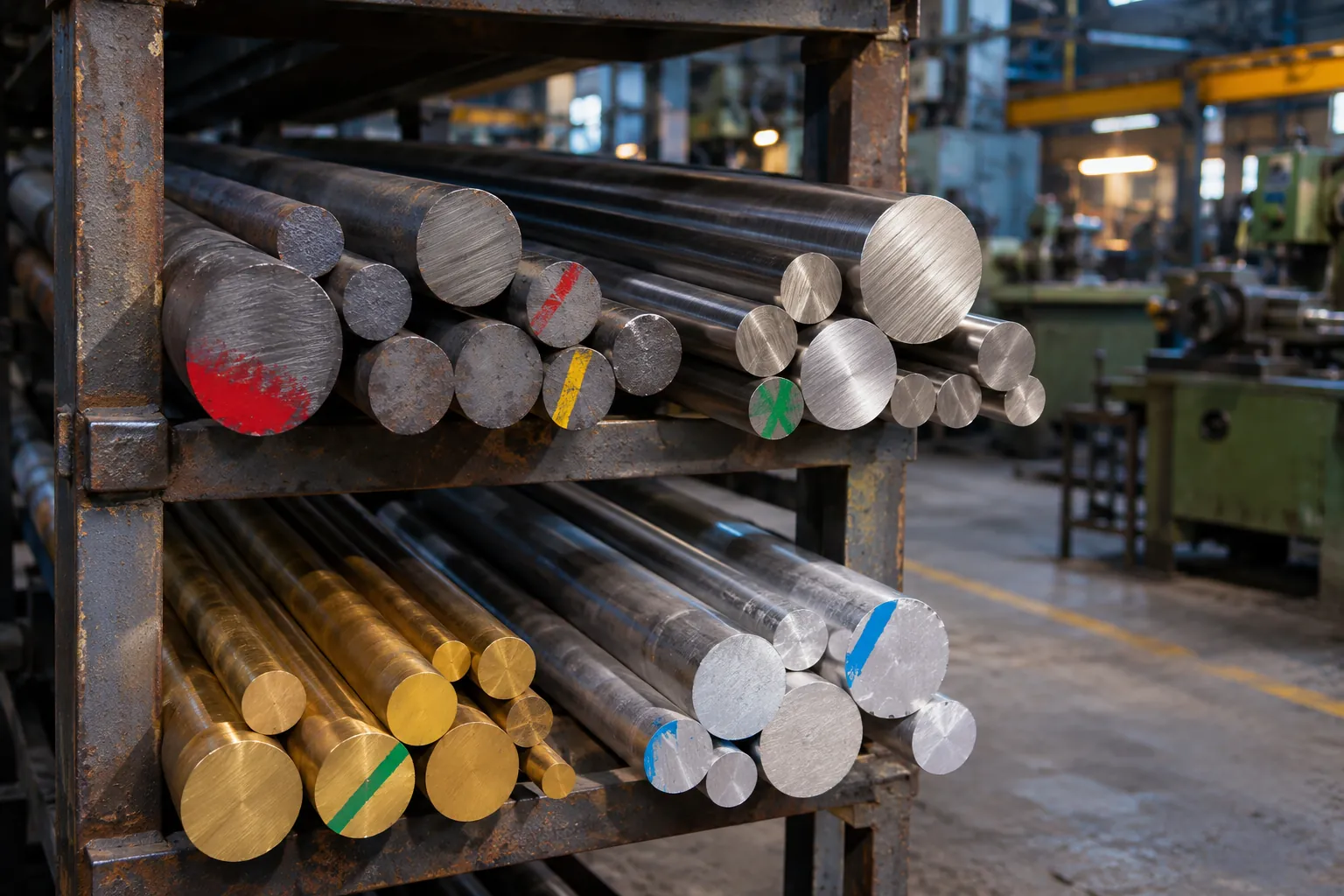
Materials
The right grade is half the life of a part. Here is what we work with every week, and where each one makes sense.
IS 2062, EN3, bright bar
The everyday choice for brackets, frames, base plates and general machine parts. Easy to machine and weld, economical, and readily available.
Typical uses: Fabrication, base plates, bushes, general spares
EN8, EN9, EN19, EN24, EN31
Stronger and tougher than mild steel and can be hardened. Used wherever a part carries load, torque or wear.
Typical uses: Shafts, pins, gears, spindles, crusher parts
SS 304, SS 316, SS 410
Corrosion resistant and hygienic. SS 304 covers most work; SS 316 is chosen for salt water, acids and aggressive cleaning; SS 410 where hardness is needed.
Typical uses: Food machinery, chemical plant, marine, pharma
6061, 6082, 7075
Light, quick to machine and naturally corrosion resistant. Ideal for fixtures, housings and parts where weight matters.
Typical uses: Housings, fixtures, plates, prototypes
Free-cutting brass, naval brass
Machines beautifully to a fine finish, resists corrosion and conducts electricity well.
Typical uses: Fittings, bushes, nozzles, electrical parts
Phosphor bronze, aluminium bronze, gunmetal
Excellent bearing properties and sea-water resistance, which is why most bushes and marine wear parts are made from it.
Typical uses: Bushes, wear rings, worm wheels, marine spares
Grey iron, SG iron
Good vibration damping and wear resistance. Usually supplied as a casting and machined on its working faces.
Typical uses: Housings, pulleys, flywheels, machine bodies
Nylon, Delrin (POM), PTFE, UHMW
Light, quiet and self-lubricating. Often used to replace metal in bushes, rollers and wear strips.
Typical uses: Bushes, rollers, gears, guides, seals
Not sure which grade?
Describe what the part does, what it runs against and whether it sees water, chemicals, heat or shock. That is usually enough to choose a grade that lasts without over-spending.
FAQ
Yes. Customer-supplied bar, plate, castings and forgings are welcome. The material is kept identified through the job and offcuts are returned on request.
Tell us when you enquire that a material test certificate is required and we will source the material accordingly.
Tell us what the part does and the conditions it works in. In most cases a suitable grade can be chosen from the application. For critical parts the old material can be tested.
Parts are normally machined before hardening. Where a hardened part needs a profile cut or corrected, wire cut EDM is used.
Share a drawing, a sample or a photo with dimensions. We will come back with price and delivery, usually the same day.