Machining basics
Thread Types Explained: Metric, BSP, NPT, Square and Trapezoidal
How to identify the thread on your part and specify it correctly, so the replacement screws in the first time.
2 min readBy the Alhamd Technologies team
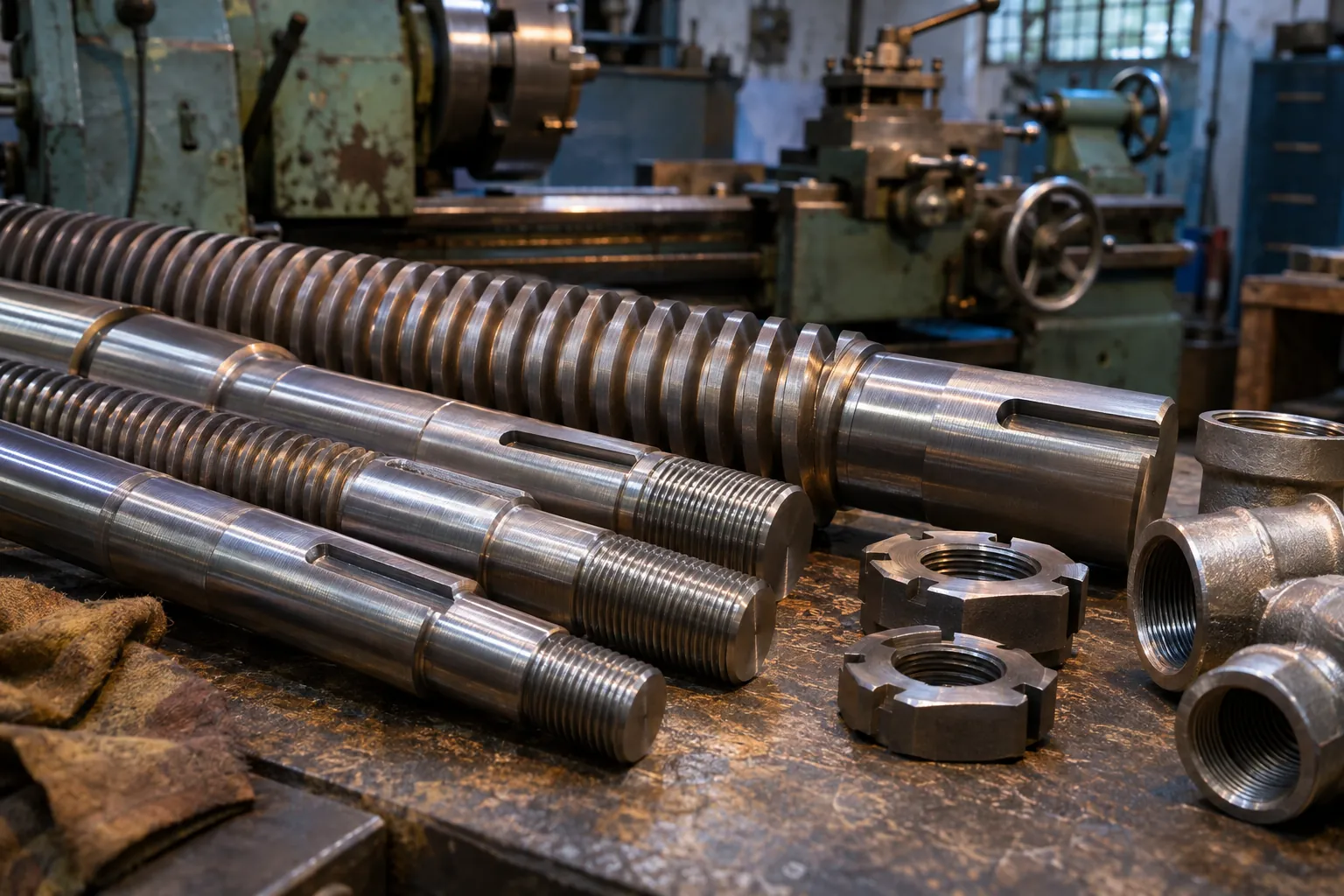
More replacement parts are rejected for a wrong thread than for any other reason. Two threads can look identical and still refuse to fit, because they differ in pitch or flank angle by a fraction. Knowing the main families saves a second trip to the workshop.
Metric threads (M)
The standard for general fasteners. Written as diameter and pitch in millimetres, for example M20 × 2.5. If no pitch is given, the coarse pitch is implied. Fine-pitch metric threads are common on shafts, lock nuts and adjusters, so always state the pitch.
BSP pipe threads
The usual pipe thread in India. BSPP is parallel and seals with a washer or O-ring; BSPT is tapered and seals on the thread. The size name refers to the nominal pipe bore, not the thread diameter, so a “1 inch BSP” thread measures about 33 mm across.
NPT pipe threads
The American tapered pipe thread, found on imported equipment and in oil and gas service. It has a 60° flank angle against BSP’s 55° and a different pitch in most sizes. NPT and BSP will start together and then bind. Never mix them on a pressure joint.
Square, ACME and trapezoidal threads
These are power threads, designed to move loads rather than clamp parts. You find them on lead screws, vice screws, valve spindles and jacks. Trapezoidal (metric, 30°) and ACME (inch, 29°) have largely replaced the true square thread because they are stronger and easier to produce.
How to identify an unknown thread
- Measure the outside diameter of the male thread with a vernier
- Measure the pitch with a thread gauge, or count threads over 25.4 mm
- Check whether the thread is parallel or tapered
- Note the hand: most are right-hand, but left-hand threads are used on rotating parts
- When in doubt, send the mating part
Order threads as a pair where you can
For lead screws and special threads, having the screw and nut made together is the surest way to get a smooth fit with the right clearance.